I used to finish a meal and still feel like something was missing. Not hungry exactly just unsatisfied in that specific way where you’re back in the kitchen twenty minutes later. It took me an embarrassingly long time to realize the problem was protein, and that fixing it on a plant-based diet is nowhere near as complicated as people make it out to be.
This guide covers the best vegan protein sources, five complete meals that each hit 30g or more per serving, and how to stop chasing snacks at 10pm.
Why plant protein is more complete than you think
The “incomplete protein” worry gets repeated so often it’s become reflex. The actual science is messier. Yes, most individual plant foods are lower in one or two essential amino acids. But your body doesn’t need all nine in one meal it draws on a running pool from everything you’ve eaten throughout the day. Eat varied plant foods and completeness largely takes care of itself.
The more practical question is quantity. Gram for gram, most plant proteins have lower digestibility than animal proteins, which means you need slightly more of them. Research published in the Journal of the International Society of Sports Nutrition (2020) found that athletes on high-protein plant-based diets gained comparable muscle mass to those eating animal protein as long as total intake was matched. That last clause is the whole game.
For active people, aiming for 1.6 to 2.2g of protein per kilogram of bodyweight covers it. For a 70kg person who exercises regularly, that’s 112–154g daily spread across three or four meals, very doable.
The 7 best vegan protein sources
Not all plant proteins are worth your time. Here’s what actually moves the needle.
Seitan delivers 25g protein per 100g the highest of any whole plant food with a chewy, meaty texture that holds up to frying, grilling, and braising. It’s made from gluten, so it’s off the table if you’re celiac, but everyone else should cook with it more.
Hemp seeds have 31g per 100g. Three tablespoons on any bowl adds 10g protein with zero cooking. Keep them on the counter, not in a cupboard.
Tempeh has 19g per 100g, with better digestibility than tofu thanks to fermentation. Slice thin, marinate in soy sauce and vinegar, pan-fry until golden.
Edamame delivers 11g per 100g, frozen and ready in four minutes, with good leucine content for a plant food.
Firm tofu ranges 8–12g depending on brand. Freeze it, thaw it, press it that process changes the texture and dramatically improves how much marinade it absorbs.
Black lentils give you 9g per 100g and hold their shape for bowls and salads. Black beans come in at 8.9g per 100g cooked pair them with any grain and you’ve covered the full amino acid spectrum.
Recipe: tempeh and black bean power bowl (34g protein)
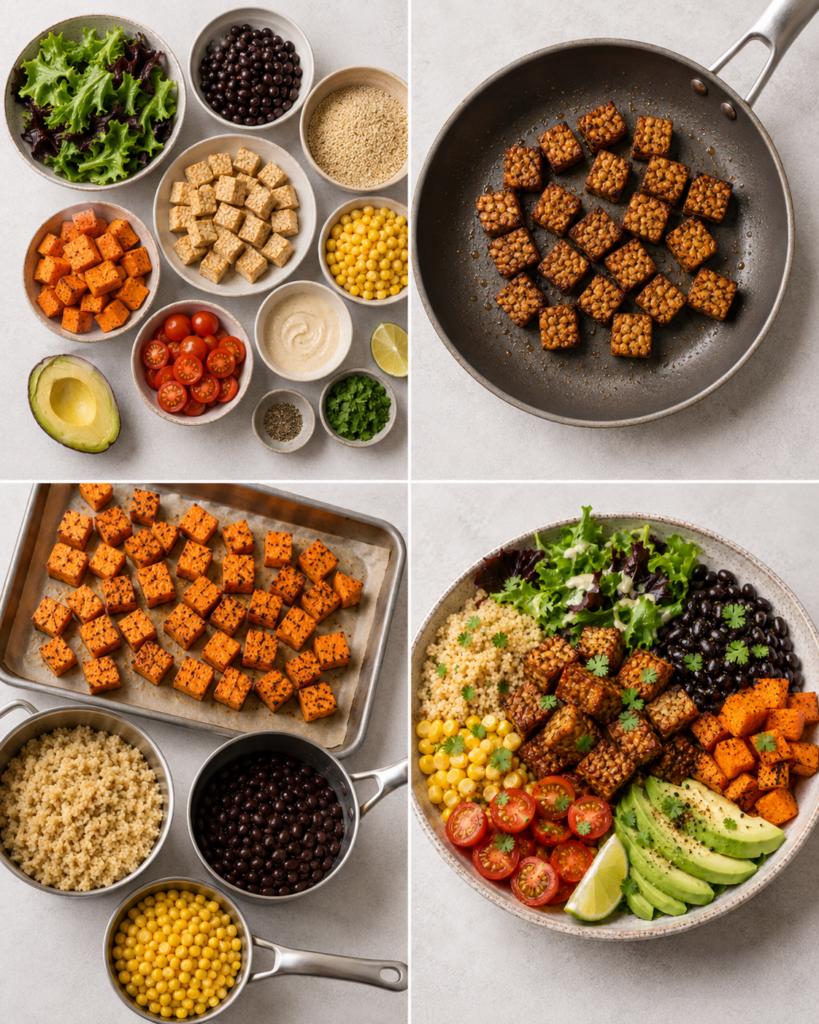
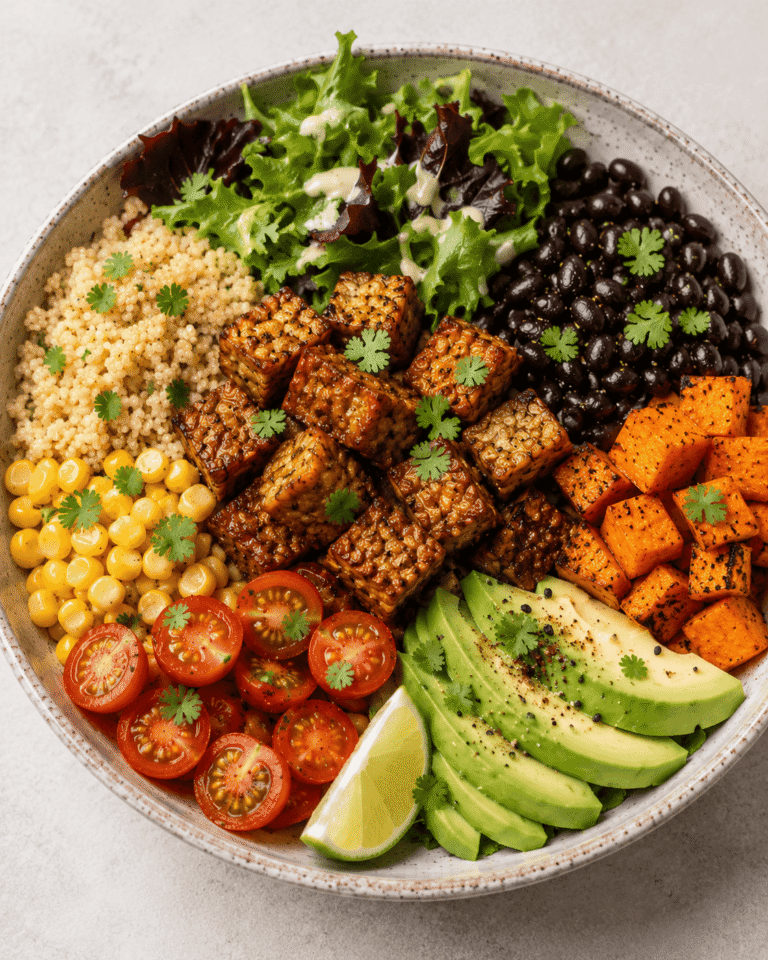
This is the bowl I make when I want something fast and filling. Tempeh brings the texture, black beans round out the amino acid profile, and the tahini-lime dressing makes it feel like a real meal rather than a nutrition checklist. Twenty-two minutes start to finish.
How to build a high-protein vegan week without burning out
Cook protein bases on Sunday, not finished meals. An hour of batch cooking marinated tempeh, a pot of lentils, pressed and seasoned tofu gives you building blocks for four or five days of different meals. Scramble the tofu for breakfast, put the lentils in a salad for lunch, use the tempeh in a stir-fry for dinner. Same ingredients, different food every day.
Freeze tempeh in its marinade. Slice it, bag it with soy sauce, rice vinegar, garlic, and whatever spices you want, and freeze the whole thing raw. Thaw overnight in the fridge. The freezing breaks down the cell walls so it absorbs more flavor better result with less effort than marinating fresh.
Keep hemp seeds on the counter. If you have to go looking for them, you won’t use them. If they’re next to the stove, three tablespoons end up on everything.
What actually affects protein absorption
Digestibility matters more than combining. Plant proteins average 60–80% digestibility versus 90–95% for most animal proteins. You compensate by eating a bit more total protein. The “combining proteins” requirement was based on a 1971 book that the author later retracted.
Leucine is worth thinking about if muscle building is the goal. The best plant sources are soy (tempeh, tofu, edamame) and hemp seeds. Anchor at least one or two meals per day around those and you’re covered.
You don’t need protein powder. It helps if you’re consistently falling short through food alone, but it’s not a requirement.
Related recipes
- Tempeh vs tofu: which has more protein
- High-protein vegan breakfast: 7 meals that keep you full
- Vegan lentil recipes: 5 dinners under 30 minutes
- Seitan recipe from scratch
- Vegan meal prep for the week: high-protein edition
- Edamame recipes beyond the bowl
- Vegan protein salad: 4 bowls with 25g+ per serving
- Can you build muscle on a vegan diet?
- Vegan post-workout meal
- High-protein vegan soup
Frequently asked questions
How much protein do vegans need per day?
Most adults need around 0.8g per kg of bodyweight as a minimum. Active people or those trying to build muscle should target 1.6–2.2g per kg. For a 70kg person who exercises regularly, that’s 112–154g daily very achievable across three or four meals.
Is soy protein safe to eat every day?
The research is fairly consistent: whole soy foods (tofu, tempeh, edamame) are safe for daily consumption for most people. The concern about estrogen comes from a misunderstanding of phytoestrogens, which interact with estrogen receptors differently than actual estrogen. Japan and Korea have some of the highest soy consumption in the world and don’t show the hormonal effects that internet forums predict.
What’s the fastest high-protein vegan meal?
Frozen edamame on rice with hemp seeds and tamari. Ready in eight minutes. Add sriracha and sesame oil. It hits 28–32g protein depending on portions.
Can you build muscle on a vegan diet?
Yes, with enough total protein and consistent training. The 2020 JISSN study showed comparable muscle gains between plant-based and omnivore athletes when protein intake was matched.
What’s the difference between tempeh and tofu for protein?
Tempeh has about 19g per 100g cooked, tofu has 8–12g. Tempeh also has better digestibility because of fermentation. See the full tempeh vs tofu comparison for more detail.